When Do Chickens Start Laying Eggs? Point of Lay by Breed
6 min read · Updated July 2026
The short answer: 18 to 22 weeks (usually)
Most backyard hens lay their first egg somewhere between 18 and 22 weeks old — roughly 4.5 to 5.5 months. That's the average, not a promise. Some overachievers start at 16 weeks; some fluffy heritage-breed girls make you wait 7 or 8 months while eating like they're training for a marathon.
A young hen that hasn't laid yet is called a pullet, and the moment she's about to start is called point of lay — a phrase you'll see a lot if you're buying started birds.
Two big things move that timeline:
- Breed. Production breeds are bred to start early and lay hard. Heritage and ornamental breeds take their sweet time.
- Season. Chicks hatched in spring hit point of lay in late summer when days are long — perfect. Chicks hatched in late summer or fall often hit maturity in the short, dark days of winter and may hold off until the days lengthen again in spring.
So before you start googling 'is my chicken broken' (we've all done it), check her age, her breed, and the calendar.
Point of lay by breed type
Here's the rough breakdown by category. Individual birds vary, but these ranges hold up well:
- Production layers (16-20 weeks): White Leghorns, Golden Comets, ISA Browns, and other sex-links are the early starters. These birds were bred for exactly this.
- Dual-purpose breeds (18-24 weeks): Rhode Island Reds, Australorps, Plymouth Rocks, Sussex, and Wyandottes — the classic backyard birds. Reliable, just slightly less rushed.
- Large heritage breeds (24-28+ weeks): Orpingtons, Brahmas, and Cochins grow big frames first and lay second. Brahmas in particular can push past 7 months.
- Bantams and ornamentals (20-28 weeks, highly variable): Silkies are famous for being unpredictable — some lay at 5 months, some closer to 9, and some seem to consider laying an optional hobby.
If you're still choosing your flock and first eggs matter to you, browse the breed guide and weigh early laying against temperament, cold-hardiness, and looks. There's no wrong answer — just different trade-offs.
Signs your pullet is close to laying
Chickens telegraph their first egg weeks in advance if you know what to watch for:
- Comb and wattles turn red and plump. A pullet's comb is small and pinkish; as her hormones ramp up, it grows noticeably larger and turns a rich red. This is the most reliable sign.
- The submissive squat. Walk toward her and she suddenly crouches, drops her wings slightly, and holds still. It looks odd, but it means she's hormonally mature — eggs are usually 1-2 weeks out.
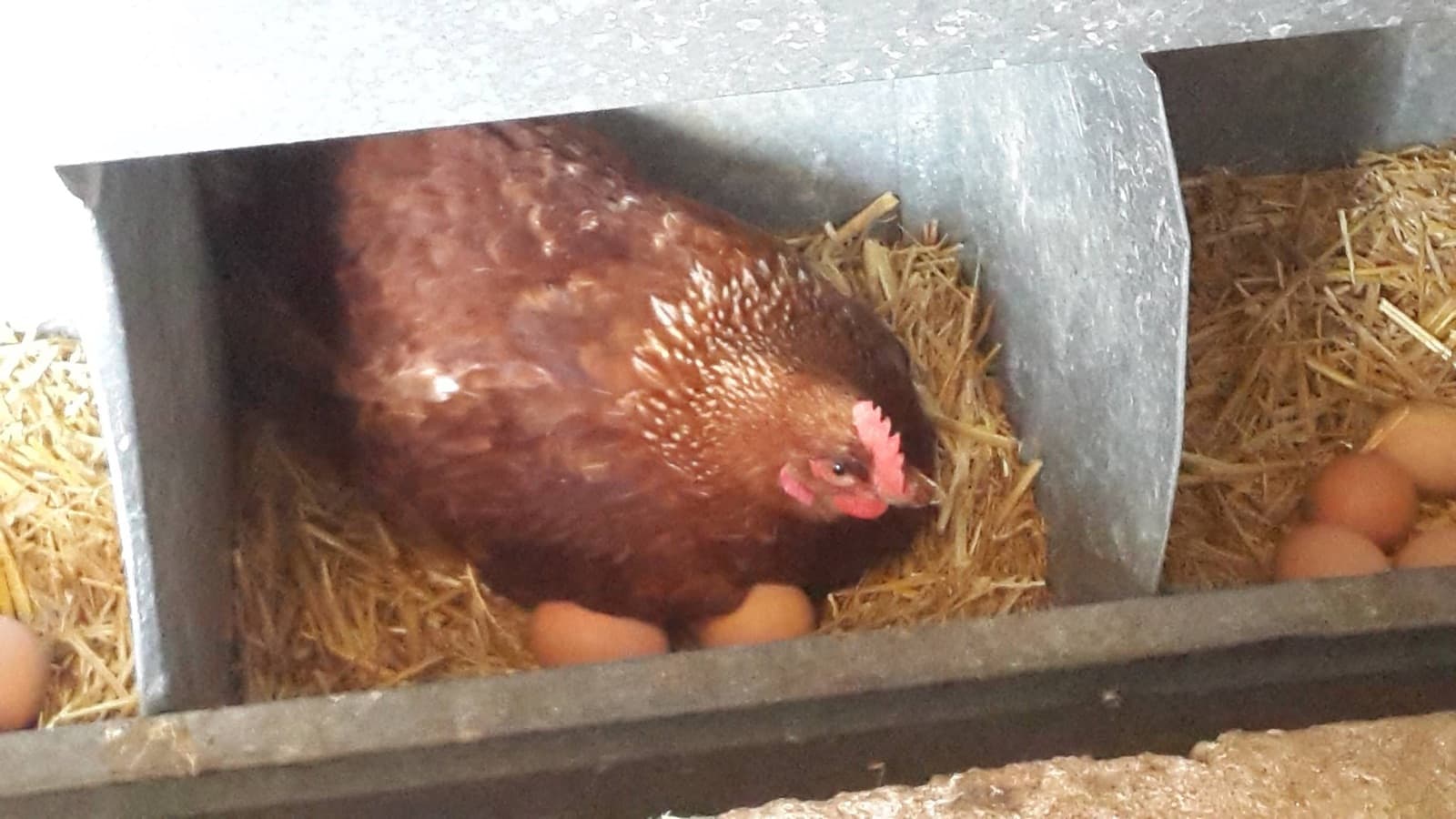
- Nest box curiosity. She starts exploring the nest boxes, rearranging bedding, and sitting in them 'practicing.'
- Louder, chattier behavior. Many pullets get vocal right before lay, and you may hear the first renditions of the classic 'egg song' (a proud, extremely unsubtle bawk-bawk-bawk-BAGAWK).
- Bigger appetite. Egg production takes fuel, and she knows it.
When you see squatting plus a bright red comb, switch her to layer feed if you haven't already, put out a dish of oyster shell, and check the nest boxes daily. Something's coming.
First-egg quirks (weird is normal)
First eggs are often... a journey. A pullet's reproductive system takes a few weeks to calibrate, so don't panic over any of these:
- Tiny eggs. First eggs (sometimes called pullet eggs or 'fairy eggs' when they're truly miniature) can be half normal size, occasionally with no yolk at all. Totally fine — and honestly kind of adorable.
- Soft or thin shells. A rubbery or paper-thin shell here and there is common early on. Keep free-choice oyster shell available and it usually resolves within a couple of weeks.
- Double yolks. Young hens sometimes release two yolks at once. Breakfast bonus.
- Eggs in strange places. Until she learns the nest box, you may find eggs on the coop floor, in the run, or under a bush. A ceramic or wooden fake egg in each nest box teaches the lesson fast.
- Irregular timing. She might lay two days in a row, skip three, then lay again. The rhythm settles as she matures.
If soft shells persist for more than a few weeks, or a hen strains without producing anything, that's worth a closer look — but early oddities are just the factory warming up.
How to set her up for a strong start
A few things genuinely help pullets start laying on time and keep laying well:
- Switch to layer feed at point of lay (around 18 weeks or at the first egg). Layer feed has the extra calcium shells demand — but don't feed it to younger birds, as excess calcium can harm growing pullets.
- Offer oyster shell in a separate dish, free choice. Hens self-regulate calcium remarkably well.
- One nest box per 3-4 hens, dim and cozy, with a fake egg to mark the spot.
- Don't crowd them. Stress delays lay and causes trouble later — if you're unsure your setup is big enough, the coop size calculator does the math for you.
- Consistent fresh water. Eggs are mostly water; even a few hours without it can disrupt laying.
- Skip the shortcuts. There's no safe way to force earlier laying — extra protein and 'laying supplements' won't beat biology. Good feed, low stress, and patience win.
Then one morning you'll hear the egg song, find a small warm egg, and take approximately forty photos of it. Standard procedure.