How to Sell Backyard Chicken Eggs Legally (and Actually Profit)
7 min read · Updated October 2026
First stop: your state's rules (seriously, before anything else)
Here's the thing nobody tells you at the feed store: egg-selling rules are set state by state (and sometimes county by county), and they vary wildly.
Most U.S. states are friendly to small flocks — there's usually an exemption that lets you sell eggs directly to consumers from your own farm or home without a license, up to a flock-size cap. But the caps are all over the map: 50 hens in Kansas, 500 birds in Ohio, fewer than 3,000 in Michigan and Pennsylvania, and California has no exemption from registration at all. We've read the rules state by state, straight from the law. The details differ everywhere:
- Some states require a simple (often cheap or free) egg handler's license or registration even for small sellers.
- Some allow farm-gate sales freely but add requirements the moment you sell at a farmers market, to a restaurant, or to a grocery store.
- Refrigeration, labeling, and carton rules differ from state to state.
- Cities and counties can layer on their own rules, especially for home-based sales.
Your move: search '[your state] cottage food law eggs' and '[your state] department of agriculture egg sales,' or just call your state ag department and county extension office — they field this question constantly and are almost always helpful. Fifteen minutes of homework keeps your egg money drama-free. Everything below covers common patterns, but your state's rules win.
Price to cover your costs (most people don't)
The classic backyard egg-selling mistake: pricing at supermarket levels while your costs run double. Your eggs are not supermarket eggs — fresh, pastured-style, days-old eggs with vivid yolks are a premium product, and your customers know it. Price like it.
Step one: know your real cost per dozen. Feed is the big line item — run your flock size and local feed prices through the feed cost calculator, then the egg price calculator turns that into a cost and a price per dozen. Then add bedding, oyster shell, cartons (~$0.40-0.60 each new), and a little for everything else. Most small flocks land somewhere around $2.50-4.50 per dozen in real costs, sometimes more with small flocks or pricey feed.
Step two: check the local market. Look at what other farm-gate and farmers-market sellers near you charge. In recent years, backyard and small-farm eggs have typically sold for $5-8 per dozen, with higher prices in cities and on the coasts, lower in rural feed-store country.
Step three: don't undercut yourself. Selling at $3 when your cost is $4 isn't a business, it's a subsidy program for your neighbors. It also quietly undercuts other local sellers. Price fairly, mention the words 'fresh' and 'pastured' where true, and you will not lack for buyers — demand for genuinely local eggs almost always outruns supply.
Cartons and labeling: the basics that keep you legit
Carton rules trip up more small sellers than anything else, so here are the common patterns — verified against your own state's rules, of course. When you're ready, the free carton label maker prints the federal safe handling statement with your details:
Cartons:
- Many states require new, unused cartons for eggs that are sold, because reused cartons carry another farm's (or brand's) information and potential contamination. Other states allow reused cartons if all original branding is fully covered or removed. Check before you accept that grocery bag of used cartons from your aunt.
- Plain new cartons cost roughly $0.40-0.60 each in bulk online or from farm stores — build it into your price.
Labels — common requirements include some mix of:
- Your name/farm name and address
- The word 'EGGS' and the quantity (e.g., 'One Dozen')
- A pack date or sell-by date
- The term 'ungraded' (small sellers usually can't claim USDA grades like AA or sizes like 'Large' without actually grading and weighing — 'ungraded' keeps it honest)
A simple printed sticker covers all of this and looks professional. While you're at it, make it charming — people buy 'Cluckingham Palace Farm Fresh Eggs' faster than a blank carton.
Storage: many states require selling eggs at 45°F or below, and clean, uncracked eggs only. When in doubt, refrigerate — it's also just better practice.
Where to sell: from the driveway cooler to the farmers market
Ranked roughly from easiest to most involved:
- Friends, neighbors, and coworkers. Zero overhead, zero marketing, and where almost everyone starts. A recurring 'egg list' of 5-10 households who each take a dozen a week can absorb a small flock's entire output.
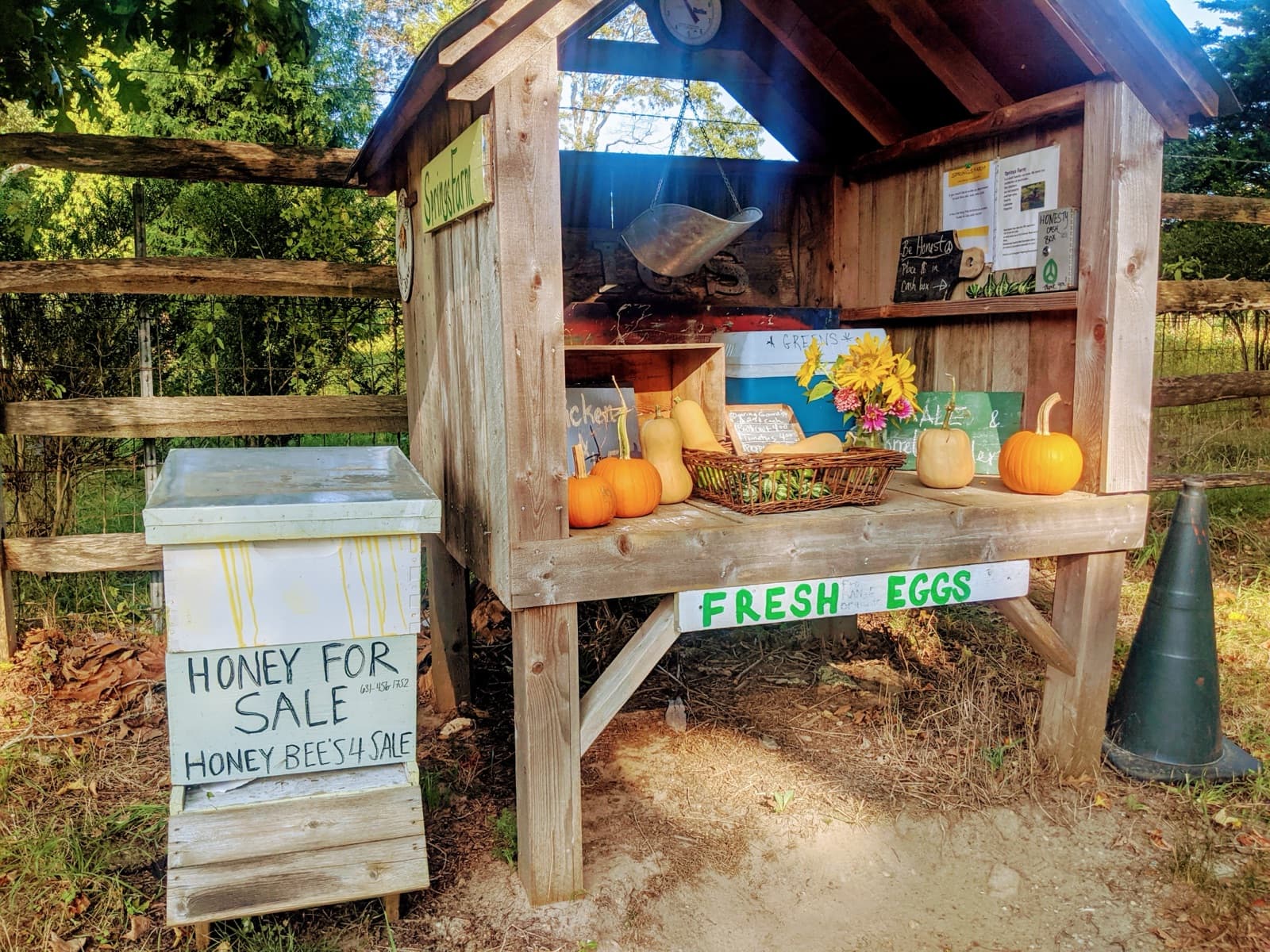
- The farm-gate stand. A cooler at the end of the driveway with a sign and an honor-pay box is a beloved American institution, and it's the sales channel most states regulate the least. A card reader or Venmo QR code on the sign modernizes it nicely.
- Community boards and local groups. Neighborhood apps and local food groups move a lot of eggs. Mind each platform's rules on animal-product sales, and prefer local-pickup arrangements.
- Farmers markets. Great volume and great prices, but this is usually where extra requirements kick in — many states want a license, grading, or specific labeling for market sales, and the market itself will have vendor rules and fees. Worth it if you have consistent supply.
- Restaurants, bakeries, and grocers. The biggest step up in both price stability and regulation — most states treat wholesale/retail sales very differently from direct-to-consumer. Verify requirements before approaching a chef.
A note on supply: production swings hard with the seasons (see why hens slow down), so promise customers a range, not a guarantee — 'a dozen most weeks' beats apologizing every October.
Handling eggs like a pro
Food safety is where hobby habits need an upgrade — these are your customers now, not just your breakfast:
- Start with clean nest boxes. The best egg-cleaning strategy is eggs that never get dirty: fresh bedding, one box per 3-4 hens, and no roosting (i.e., pooping) in the boxes. Collect at least once daily, twice in summer and winter.
- Understand the bloom. Eggs are laid with a natural protective coating (the bloom or cuticle) that seals the pores against bacteria. Unwashed, the bloom stays intact — which is why unwashed eggs keep so well. Washing removes it, and washing in cold water can actually pull surface bacteria inward.
- So: dry-clean when you can. Lightly soiled eggs can be buffed with a dry cloth or fine sandpaper, keeping the bloom intact. Genuinely dirty eggs should be washed properly — water noticeably warmer than the egg (warm water makes the egg contents expand slightly, pushing outward against the pores rather than drawing anything in), then dried and refrigerated promptly.
- Once washed, always refrigerated. No exceptions. And check your state's rules — some require refrigeration for all sold eggs regardless.
- Candle or at least inspect. Sell only clean, uncracked eggs. Hold questionable ones back for your own kitchen.
- Date everything. Write or stamp the pack date on the carton. Fresh eggs keep 4-5 weeks refrigerated; your customers should never have to wonder.
Track it like a business (because it is one)
The difference between 'selling some eggs' and running a tiny profitable egg business is embarrassingly simple: writing things down.
Track four numbers:
- Eggs collected per day. This is your production baseline — it's how you spot a molt, a hidden nest, or a health problem weeks earlier than you otherwise would (and when production dips, our troubleshooting guide is the checklist).
- Dozens sold and to whom. Reveals your real demand, your best customers, and how much you can promise the new neighbor who just asked.
- Costs. Feed, bedding, cartons, the occasional new waterer. Feed dominates — the feed cost calculator gives you the per-dozen figure that should anchor your price.
- Revenue. Cash box, Venmo, all of it.
Do that for three months and you'll know your actual profit per dozen, your seasonal curve, and whether expanding the flock pencils out (before you add birds, make sure the housing math works too — coop size calculator).
Set honest expectations: a 6-hen backyard flock selling surplus at $6/dozen is beer money, not rent money — figure a few hundred dollars a year in revenue against real costs. But a 20-30 hen flock with steady customers can genuinely cover its own costs and then some, which means the eggs your family eats become free. In backyard-chicken economics, that's the win condition.