Yokohama
OrnamentalGermany
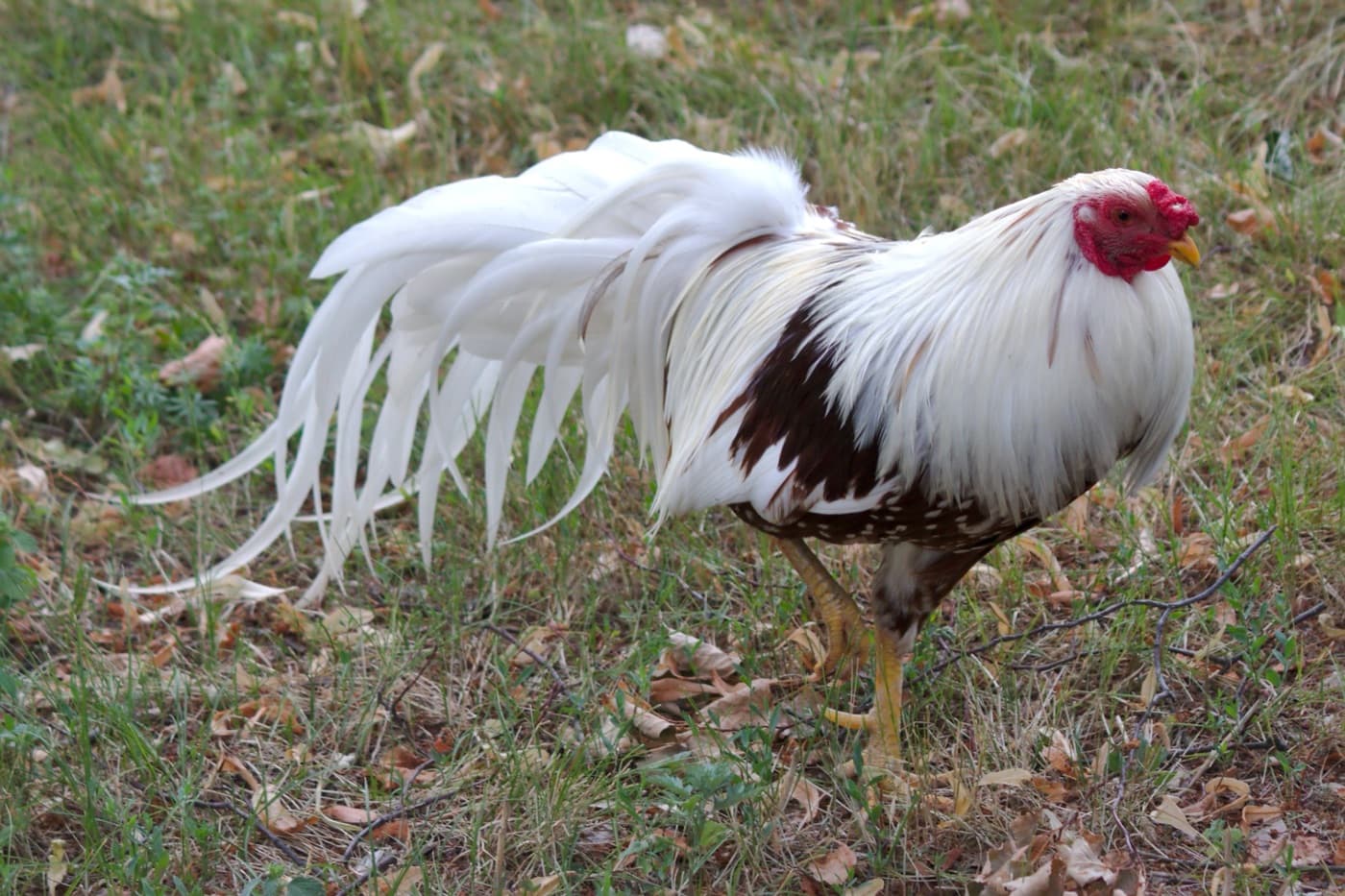
The Yokohama drapes itself in long, flowing saddle and tail feathers inherited from ornamental Japanese long-tail breeds, then carries them with the poise of a show bird that knows it. It's a gentle, delicate keeper's project best suited to dry runs and high, clean perches.
Eggs per year
60–100
Egg color
Cream
Egg size
Small
Hen weight
3–4.5 lbs
Temperament
Docile and graceful
Broodiness
Sometimes broody
Did you know?
The breed was actually standardized in Germany and named for the Japanese port of Yokohama the original birds shipped out of — not for where they were bred.
Yokohama egg production
Expect roughly 60–100 cream eggs a year from a Yokohama in her prime — about 1–2 a week, or 5–8 dozen over the course of a year. These are occasional layers — kept more for looks or character than for a full egg basket. Production naturally dips during the annual molt and the short days of winter, and eases off as a hen ages past her second or third year. Most pullets lay their first egg somewhere between five and eight months old.
Temperament & handling
The Yokohama is generally described as docile and graceful. These are calm, people-oriented birds that tolerate handling well and settle into a backyard flock without much fuss.
Climate & care
The Yokohama isn't especially cold-hardy, so in cold-winter regions give it a well-insulated, draft-free coop and take extra care to prevent frostbite. It handles summer heat comfortably too, given shade, cool water, and good airflow.
Broodiness & raising chicks
A Yokohama hen may go broody now and then, but it isn't something to count on — if hatching chicks matters to you, plan on an incubator and our incubation calculator.
Space & feeding
A Yokohama hen is a small bird at 3–4.5 lbs. As a rule of thumb, a small flock of 6 would want around 24 sq ft of coop and 60 sq ft of run, with about 2 nest boxes and 5 ft of roost. Size it to your own flock with the coop size calculator, and estimate the monthly feed bill — and your real cost per egg — with the feed cost calculator.
Is the Yokohama right for you?
A great fit if…
- You want a calm bird that's good around children
- You'd like cream eggs in the basket
- You want a striking bird kept for looks and personality
- You keep chickens in a hot climate
Think twice if…
- You want the most low-maintenance possible first bird
- You face long, hard winters
- You want the absolute maximum egg output
Yokohama FAQ
- How many eggs do Yokohama chickens lay?
- A healthy Yokohama hen lays about 60–100 cream eggs a year — roughly 1–2 a week, or 5–8 dozen over a year. Output drops during winter and the annual molt, and eases as a hen ages.
- What color eggs do Yokohamas lay?
- Yokohamas lay cream eggs, small in size.
- How big do Yokohama chickens get?
- A Yokohama hen weighs roughly 3–4.5 lbs — a small bird — with roosters running a little heavier.
- Are Yokohamas cold-hardy?
- Not especially. The Yokohama does best in mild or warm climates; in cold-winter regions it needs an insulated, draft-free coop and extra care against frostbite.
- Are Yokohamas good for beginners?
- The Yokohama is docile and graceful and tends to suit keepers with a little experience more than absolute beginners.
- Do Yokohama hens go broody?
- Sometimes. A Yokohama hen may go broody now and then, but it isn't guaranteed — plan on an incubator if hatching matters to you.
The Yokohama shows up in


More breeds to explore
Keeping Yokohamas?
Give every bird a profile in PoultryPal — track their eggs, weight, and life events, and see who's really your best layer.