Silkie
OrnamentalChinaBeginner friendly
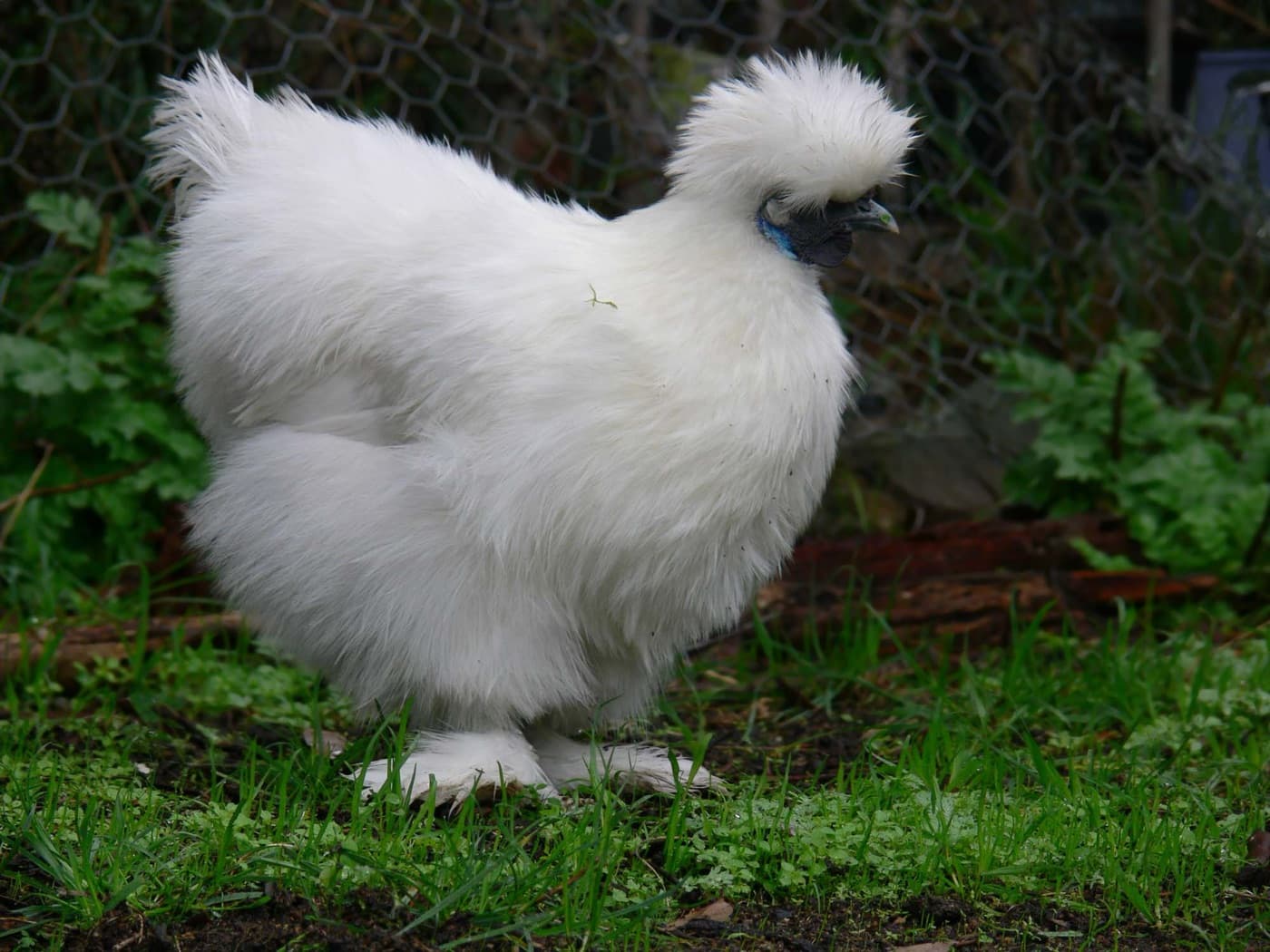
Silkies feel like kittens, mother like champions, and have been delighting people for at least 700 years. Their feathers lack the barbs that make normal plumage sleek, giving them that famous fur-like fluff — which also means they can't fly and shouldn't get soaked. They are the go-to broody hen for hatching anything.
Eggs per year
100–120
Egg color
Cream
Egg size
Small
Hen weight
2–3 lbs
Temperament
Exceptionally sweet and cuddly
Broodiness
Often broody
Did you know?
Under the fluff, Silkies have black skin, black bones, blue earlobes, and five toes — Marco Polo wrote home about "furry chickens" after his 13th-century travels in Asia.
Silkie egg production
Expect roughly 100–120 cream eggs a year from a Silkie in her prime — about 2 a week, or 8–10 dozen over the course of a year. These are occasional layers — kept more for looks or character than for a full egg basket. Production naturally dips during the annual molt and the short days of winter, and eases off as a hen ages past her second or third year. Most pullets lay their first egg somewhere between five and eight months old.
Temperament & handling
The Silkie is generally described as exceptionally sweet and cuddly. These are calm, people-oriented birds that tolerate handling well and settle into a backyard flock without much fuss — a big part of why they're such a common first breed.
Climate & care
Rated cold-hardy, the Silkie rides out hard winters well as long as the coop stays dry and draft-free — keep drinking water from freezing and watch combs and wattles for frostbite in a deep freeze. It handles summer heat comfortably too, given shade, cool water, and good airflow.
Broodiness & raising chicks
Silkie hens go broody often and make devoted mothers, so you can let one hatch a clutch the natural way. If you'd rather incubate, our incubation calculator maps out candling and hatch day.
Space & feeding
A Silkie hen is a small bird at 2–3 lbs. As a rule of thumb, a small flock of 6 would want around 24 sq ft of coop and 60 sq ft of run, with about 2 nest boxes and 5 ft of roost. Size it to your own flock with the coop size calculator, and estimate the monthly feed bill — and your real cost per egg — with the feed cost calculator.
Is the Silkie right for you?
A great fit if…
- You're new to chickens and want a forgiving bird
- You want a calm bird that's good around children
- You'd like cream eggs in the basket
- You want a striking bird kept for looks and personality
- You get real winters and need a hardy bird
Think twice if…
- You want the absolute maximum egg output
- You only want eggs and would rather hens didn't go broody
Silkie FAQ
- How many eggs do Silkie chickens lay?
- A healthy Silkie hen lays about 100–120 cream eggs a year — roughly 2 a week, or 8–10 dozen over a year. Output drops during winter and the annual molt, and eases as a hen ages.
- What color eggs do Silkies lay?
- Silkies lay cream eggs, small in size.
- How big do Silkie chickens get?
- A Silkie hen weighs roughly 2–3 lbs — a small bird — with roosters running a little heavier.
- Are Silkies cold-hardy?
- Yes. The Silkie is rated cold-hardy and rides out hard winters well, provided the coop stays dry and draft-free. Keep water from freezing and check combs and wattles for frostbite in a deep freeze.
- Are Silkies good for beginners?
- Yes. The Silkie is a forgiving, exceptionally sweet and cuddly breed that suits first-time keepers well.
- Do Silkie hens go broody?
- Often. Silkie hens are reliable setters and devoted mothers — ideal if you'd like to hatch chicks naturally, less so if you only want eggs.
The Silkie shows up in


Compare the Silkie head-to-head


More breeds to explore
Keeping Silkies?
Give every bird a profile in PoultryPal — track their eggs, weight, and life events, and see who's really your best layer.