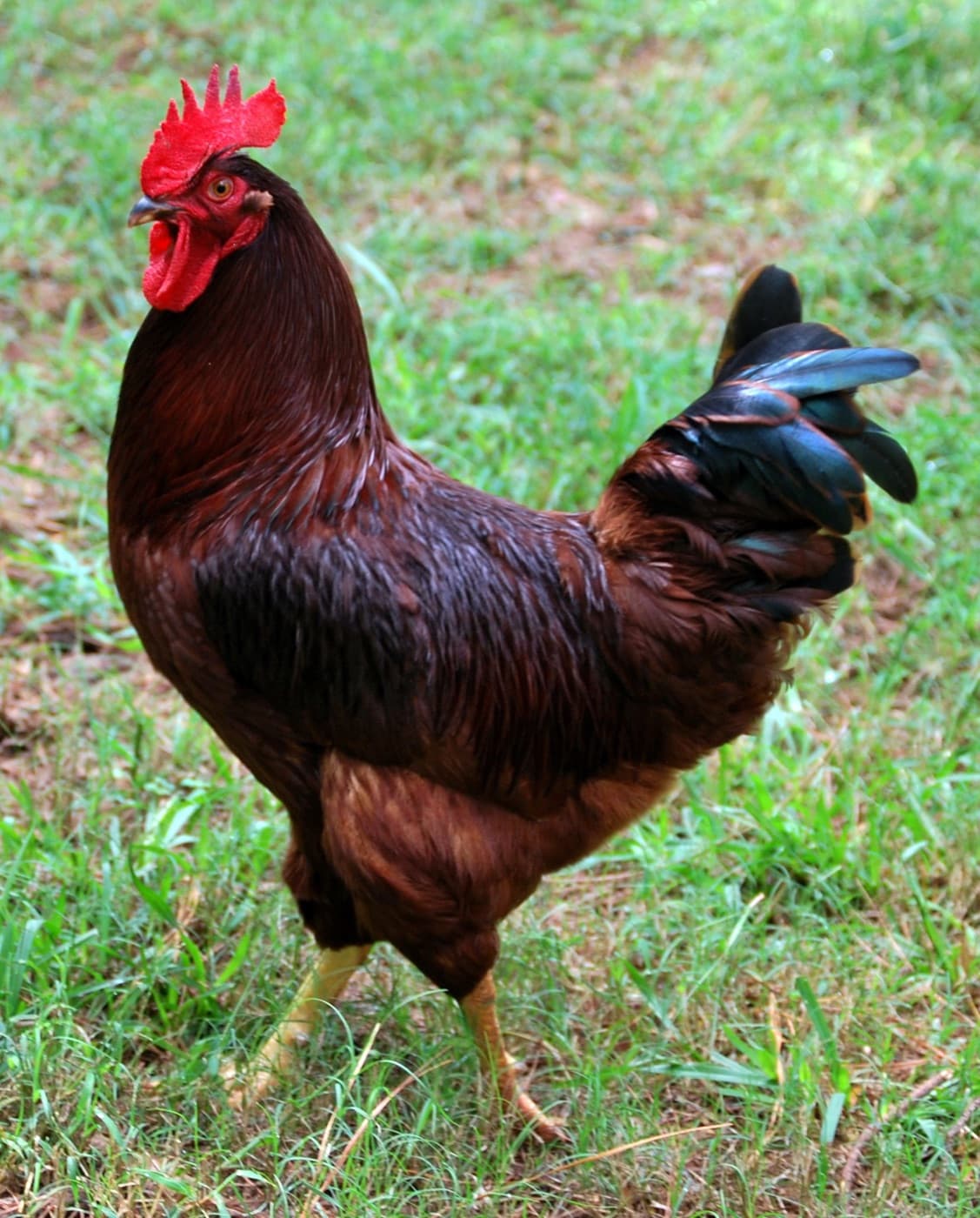

Rhode Island Red photo: HeatherLion (CC BY-SA 3.0) · White Leghorn photo: Bodlina (CC BY-SA 3.0) · via Wikimedia Commons
Rhode Island Red vs White Leghorn
Two backyard favorites, side by side — egg production, temperament, size, and hardiness, straight from our breed data. Here's how to choose.
The quick verdict
The White Leghorn is the stronger layer — about 260–320 eggs a year against the Rhode Island Red's 200–300.
The Rhode Island Red lays brown eggs; the White Leghorn lays white.
The Rhode Island Red is the bigger bird at 6–7 lbs — more presence and more meat, but more feed and coop space than the White Leghorn.
Only the Rhode Island Red is rated cold-hardy, so it's the safer bet for hard winters; the White Leghorn needs more cold-weather care.
Choose the Rhode Island Red if you want…
- A bigger table bird (7 lbs)
- Shrugs off hard winters
Choose the White Leghorn if you want…
- More eggs — up to 320 a year
- Compact — less space and feed
Side by side
| Trait | Rhode Island Red | White Leghorn |
|---|---|---|
| Purpose | Dual purpose | Egg layer |
| Eggs per year | 200–300 | ✓260–320 |
| Egg color | Brown | White |
| Egg size | Large | Large |
| Hen weight | 6–7 lbs | 4–5 lbs |
| Temperament | Confident and hardy | Active and flighty |
| Cold hardy | Yes | No |
| Heat tolerant | Yes | Yes |
| Broodiness | Rarely broody | Rarely broody |
| Beginner friendly | Yes | Yes |
Egg counts are healthy-hen peaks; real numbers dip in winter, during molt, and as a hen ages. Size a coop for either bird with our coop size calculator.
More head-to-heads






Rhode Island Red or White Leghorn — track whichever you pick
Give every bird a profile in PoultryPal, log their eggs and weight, and let the app show you which hen is really your best layer. Free on iOS and Android.