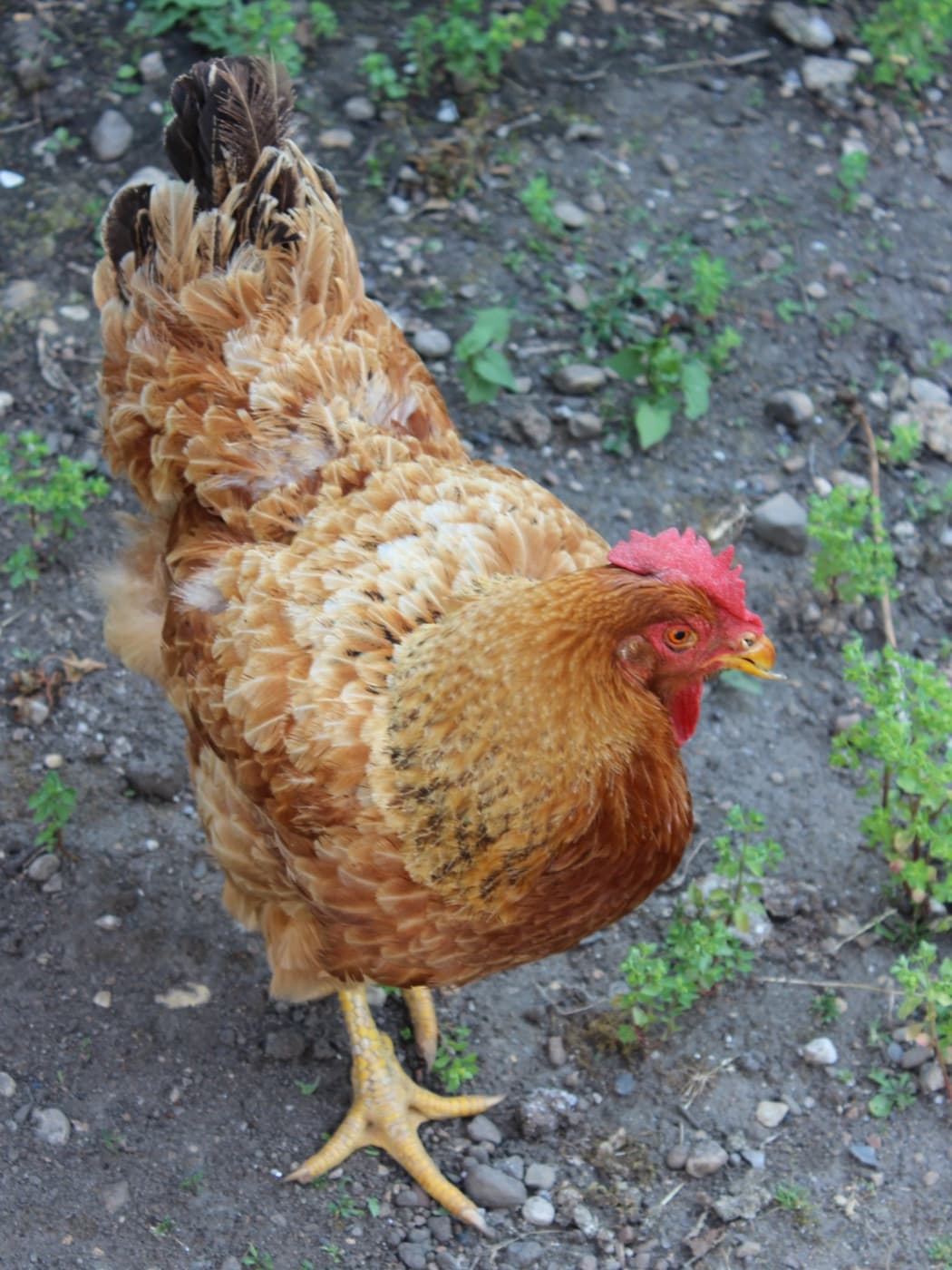
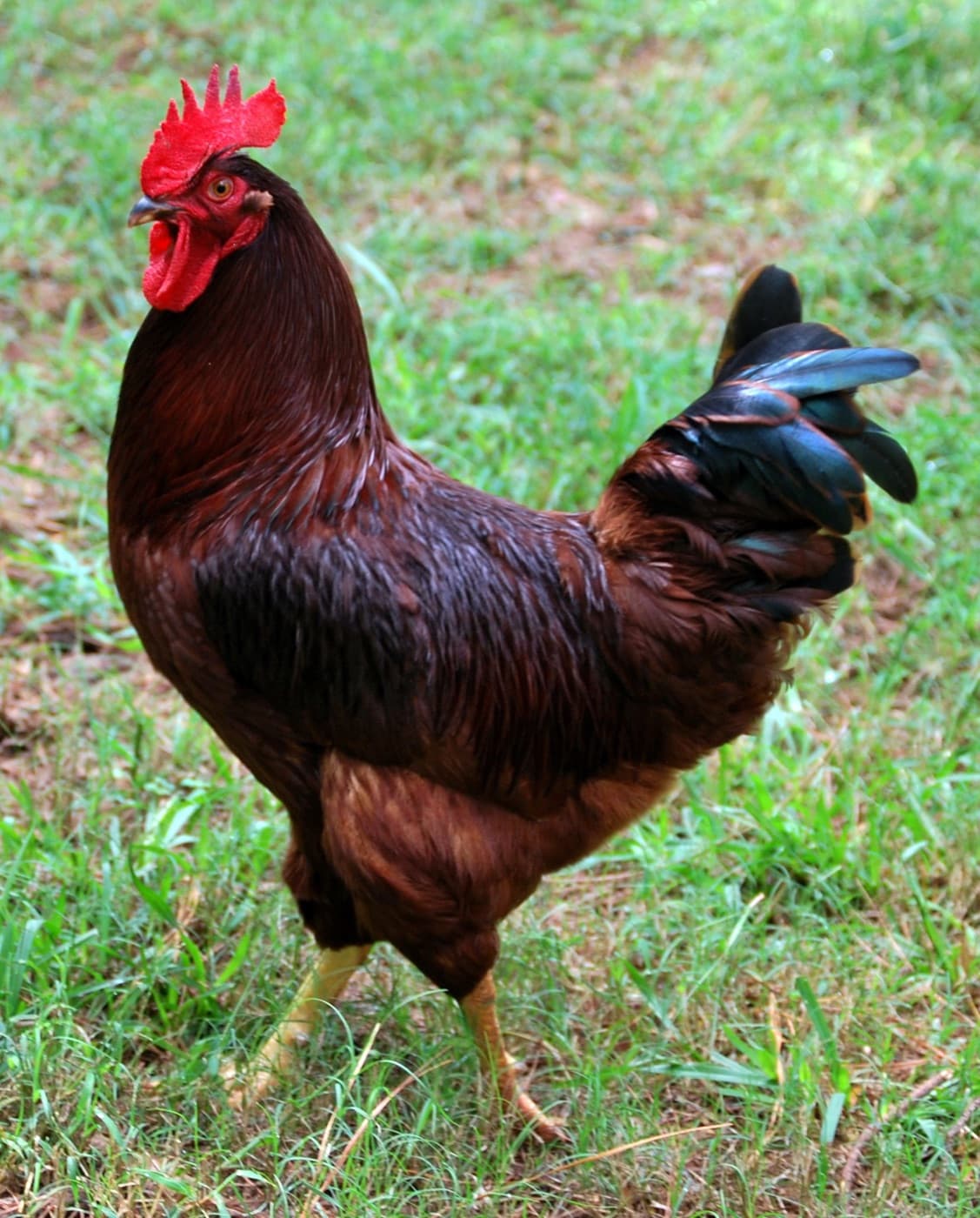
New Hampshire photo: This picture belongs to Xavier Caré. Please credit : Xavier Caré / Wikimedia Commons / CC-BY-SA. If you would like special permission to use, license, or purchase the image please contact me to negotiate terms. I'd appreciate if you could let me know about it or mail me ( xavier.carepm.me) if you want to use this picture out of the Wikimedia project scope. (CC BY-SA 4.0) · Rhode Island Red photo: HeatherLion (CC BY-SA 3.0) · via Wikimedia Commons
New Hampshire vs Rhode Island Red
Two backyard favorites, side by side — egg production, temperament, size, and hardiness, straight from our breed data. Here's how to choose.
The quick verdict
The Rhode Island Red is the stronger layer — about 200–300 eggs a year against the New Hampshire's 200–240.
These two are remarkably close on paper — near-twins in size, hardiness, and temperament — so the choice usually comes down to looks, egg color, and what your local breeder has in stock.
Choose the New Hampshire if you want…
- Calmer and more handleable
- More likely to go broody and mother chicks
Choose the Rhode Island Red if you want…
- More eggs — up to 300 a year
- Rarely quits laying to sit on eggs
Side by side
| Trait | New Hampshire | Rhode Island Red |
|---|---|---|
| Purpose | Dual purpose | Dual purpose |
| Eggs per year | 200–240 | ✓200–300 |
| Egg color | Brown | Brown |
| Egg size | Large | Large |
| Hen weight | 6–7 lbs | 6–7 lbs |
| Temperament | Friendly and food-motivated | Confident and hardy |
| Cold hardy | Yes | Yes |
| Heat tolerant | Yes | Yes |
| Broodiness | Sometimes broody | Rarely broody |
| Beginner friendly | Yes | Yes |
Egg counts are healthy-hen peaks; real numbers dip in winter, during molt, and as a hen ages. Size a coop for either bird with our coop size calculator.
More head-to-heads





New Hampshire or Rhode Island Red — track whichever you pick
Give every bird a profile in PoultryPal, log their eggs and weight, and let the app show you which hen is really your best layer. Free on iOS and Android.